Unknown's avatar

About WSTZ - James

Perhaps the world's slowest painter, a real life Dog of War who enjoys amassing mountains of unpainted models and ruminating over the last time I rolled a '1' to pick up the ball

The Road to Orclahoma Bowl/Spiky Cup!

imageOK, so it has only been two weeks since I made the drive up to Oklahoma for Critter Bowl IV, but I have already made plans to return next month for Orclahoma Bowl/Spiky Cup. this is a two day, two tournament Blood Bowl event hosted by Scott and Steve of the Both Down podcast. I had a great time at the last tournament, but Orclahoma Bowl/Spiky Cup is their “premiere” tournament event and so I am going to brave the five and a half hour drive again. At least I will not be going alone this time, as a whole group of coaches from Austin are all piling in together.

Continue reading

CritterBowl IV Results!

critter_bowl

So, yesterday I traveled five and a half hours north to Norman, OK to participate in CritterBowl IV. CritterBowl is a charity/baby shower tournament held by the hosts of the Both Down podcast, for one of the guys in their league. It was a smaller tournament with a turnout of eight coaches. It was a great opportunity to meet a few new coaches and make some friends in a small, intimate environment.

Below are the results of my four games at CritterBowl. I originally posted these game results as separate posts, but I think it will work better as all one single post. I brought my trusty Orc team, though I did do a little roster tweaking from what I usually bring.

GAME 1!

My first game was against Sarge, the coach whose father-to-be status was the whole reason we were all there. Sarge brought Goblins with lots of secret weapons and lots of Bribes. It was a very good game, and very close. Surprisingly, I did not manage to cause a single against his goblins despite having Mighty Blow on two players. On the other hand, Sarge managed to get me down to four players on the pitch at one point. Ball and Chain with Mighty Blow is just sick…

Anyway, I scored first in the first half and despite my decreasing numbers, I managed to hold my own against him. I held him off until turn seven of the second half, where he managed a miraculous goblin tossing touchdown. The game ended in a 1-1 tie.

All in all, it was a fun game played against a really nice guy.

Game 2!

Game two was played against Steve of the Both Down podcast and his Chaos Dwarves of Death, Doom, and Poopie (my name for his team, not his). Again, I fought to a 1-1 tie, but this time I was the one who managed to get the last second TD. I was still out casualtied, but not by near as much. Ties are not as great as wins, but they are better than losses.

As with the last game, Steve is a very nice guy and a very good coach. It was a tight and competitive game all mthe way through. On a side note, his Chaos Dwarf minis looked fantastic. πŸ™‚

At this point we took a quick break for lunch. We had some tasty pizza that, for some reason, was not actually cut into slices by the pizza place… WTF!?

Game 3!

Game 3 found me facing another Goblin team, but Nuffle finally favored me in this game. My opponent (I forget his name because I am terrible with names… Sorry, sir!), and his stunties put up a valiant effort, but the dice just did not treat him well. I kicked off at the start, but managed to get possession of the ball about half way through the half. I scored at the end of the half, and then received at the start of the second half. With his dwindling numbers, I managed to get close to the ends one quickly, but stalled for a couple more turns to cut down the chances of him scoring two quick Goblin tossing touchdowns. With only a few turns left, I kicked to him, but he was unable to get the ball. I managed to run in, grab the ball, and score a last turn, third touchdown. Won the game 3-0 and finally did more casualties than my opponent.

Game 4!Β 

Going into game 4, I only had one win, but I still did not have any losses, so I was feeling pretty decent. Game 4 was against Scott from Both Down, and his Dark Elves. Luckily for me, Scott only had one Witch Elf because Frenzy can be rough when your opponent is good at using it to push your players off the pitch… And Scott was. Game 4 was, again, a very competitive, and close game. As with every other game that day, I kicked off to start. Scott did a very good job holding me off and scoring late in the first half. He pushed several of my key players off the pitch, but luckily, none of them got hurt more than simple KOs. Starting the second half, most of my players came back, back and I believe Scott was down a couple by that point. I managed to muscle my way to the end-zone around turn three, and hoped that I could manage to get the ball back and actually win instead of ending the day with a third tie. Scott did his best to keep that from happening and turn 7 saw him 4 squares from the end-zone in possession of the ball. I outnumbered him by a little bit by this point, and Scott wanted to end the day with a win as much as I did. He attempted a leap to get to the end-zone, but unfortunately for Scott, he failed his landing and dropped the ball. In my previous turn, I had run a single blitzer back toward the other end-zone hoping that I could manage to get the ball back. On my final turn, I had a thrower close to where Scott’s player dropped the ball. I managed to get him to the ball, picked it up and had just enough movement to put my blitzer in Long Bomb passing range. In the luckiest rolling I have ever had in a game of Blood Bowl, I managed to successfully complete the pass, then run the blitzer into the end-zone for the win.

Scott was a very tough opponent, and it was really only his bad luck, combined with my good luck that allowed me to pull out the highlight reel win.

Final Results!

Even though I only won half of my games, thanks to the fact that I did not actually lose any games, I managed to end the day with a second place finish. I believe I ended up being the only coach without a loss.

To sum things up, I had a really good time, met some really nice people, shared a lot of laughs, and I look forward to going back for Orclahoma Bowl in March. The Oklahoma guys made me feel at home, and I recommend that everyone who is interested in Blood Bowl check out the Both Down podcast.

Critter Bowl IV

critter_bowl

As much as I have played Blood Bowl over the years, I have only played in a few tournaments. I just have not had many opportunities. So, after playing in my first table-top Blood Bowl league in years recently, I entered the ROT Blood Bowl tournament in Austin in May. I only did ok, but I had a great time. Since then, I have been looking for an opportunity to play in another tournament. Enter Critter Bowl IV, hosted by the guys of the Both Down podcastΒ on January 24th.

Critter Bowl is part Blood Bowl tournament, part baby shower for some I guy have never met. But hey, I do not really need an excuse to want to play Blood Bowl. It is in Norman, OK, though, so that will be quite a drive from Austin, TX. I am trying to get one or two of my league buddies to go with me, but we will see…

Anyway, I am thinking about actually blogging the tournament so I can document my experience for posterity and all. Should be a good time.

Second Edition Blood Bowl Minis!

So, a couple of days ago, during lunch, I decided to stop into a used game shop in town. This place is mostly board games and old toys, but I thought I would look around and check things out. Man, am I glad I did…

In the very back corner, I noticed a few blisters of old looking minis beckoning to me. When I got close enough to see them clearly, I could not believe my eyes. Among a few very old Warhammer minis, this place actually had FOUR sealed blisters of second edition Blood Bowl minis. I immediately snapped them up and took them home.

There were two blisters of Dark Elves with five minis a piece (all with the feathers still attached to their heads!), one blister of Humans with six minis, and one Star Player blister with six minis. Twenty-two minis in total… Holy Crap!

I immediately traded the Dark Elves to a friend for a mint copy of the game Block Mania, with the Mega Mania expansion. I am going to keep one or two of the Star Players for my current teams, and the rest with probably go up for trade.

I am so glad that I walked into that store… πŸ™‚

IMG_2072b

Holy Cow! I Finally Painted Some Minis!

???????????????????????????????

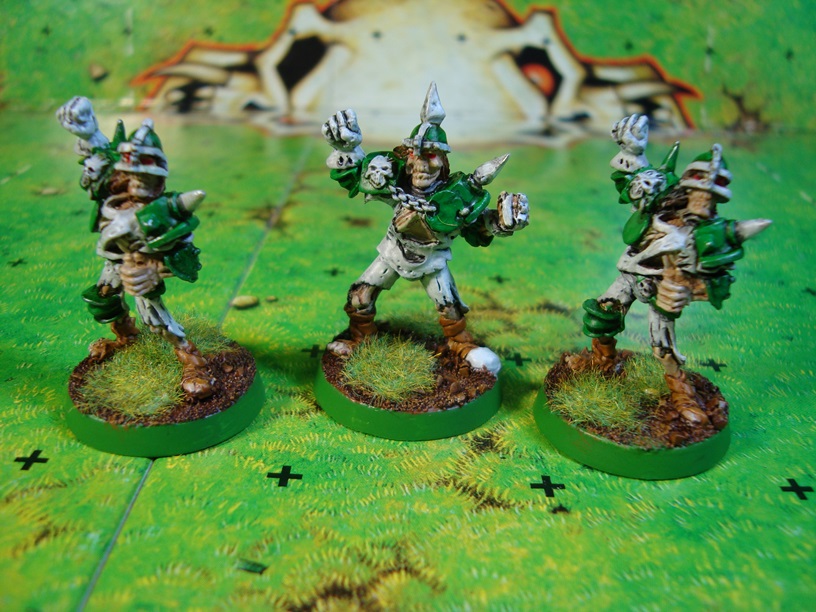
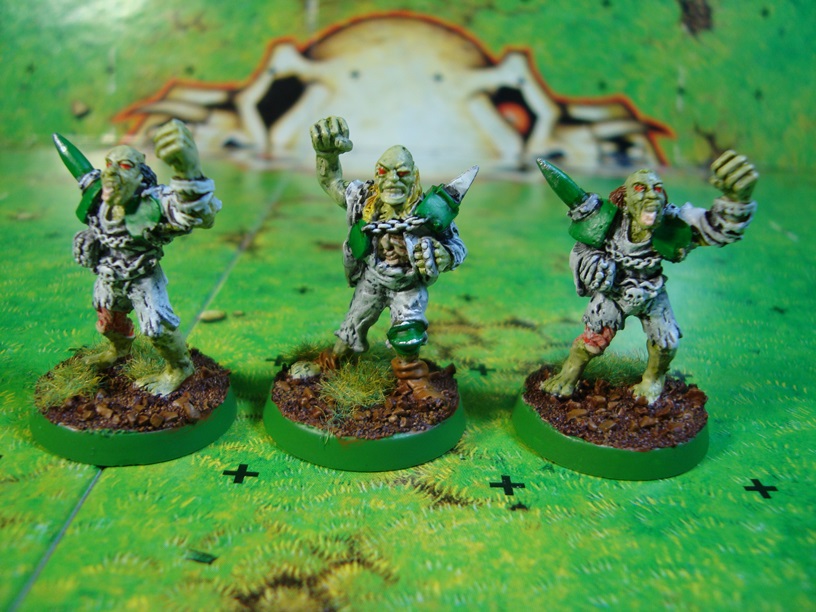
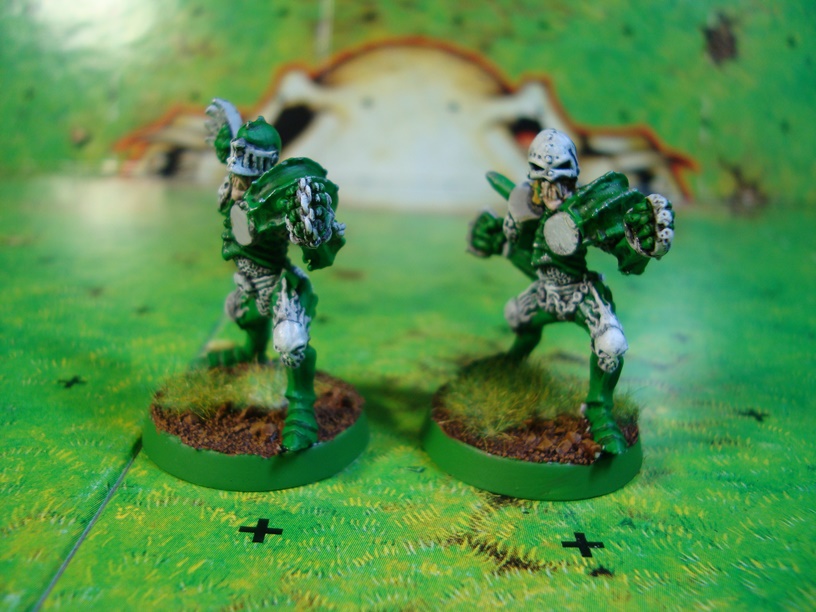
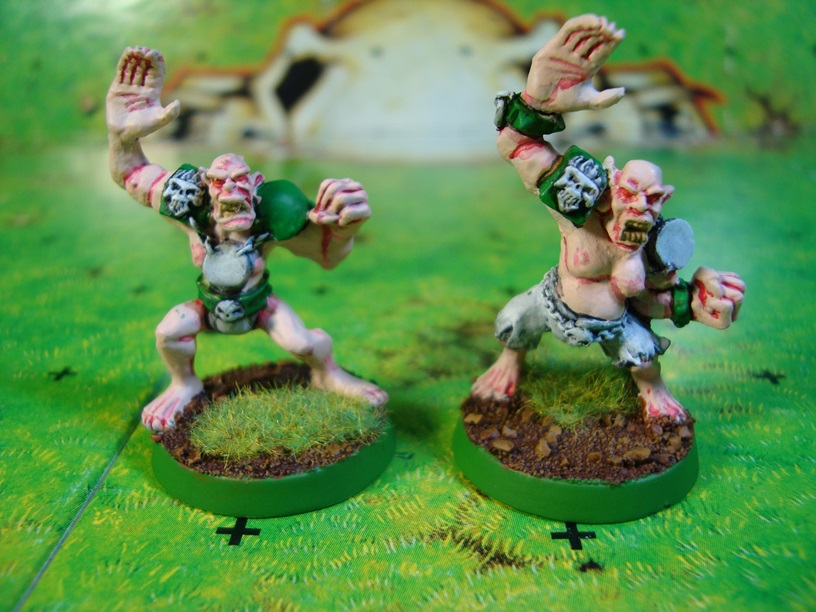
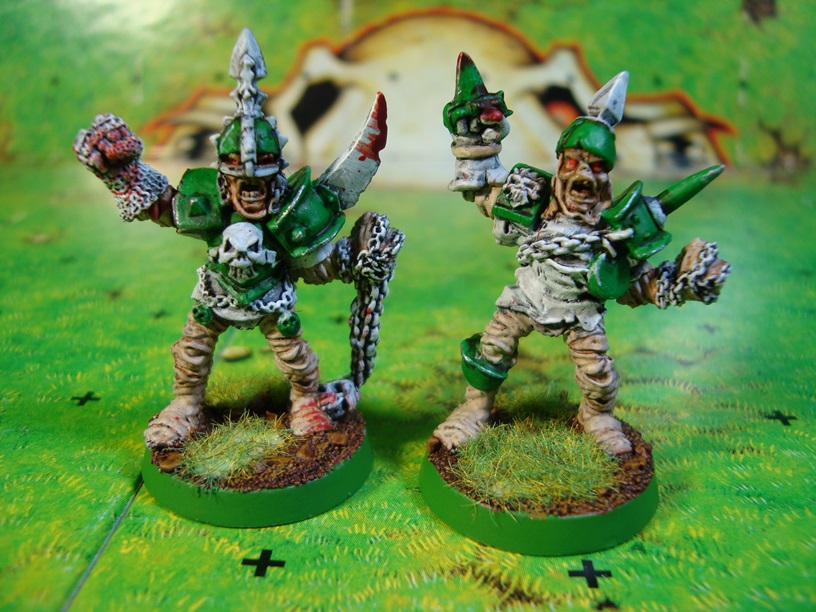
OK, so this may seem like absolutely no big deal to most of you, but to me, this is a very big deal. You see… I HATE painting minis. Like, I REALLY HATE painting minis. I enjoy making terrain, but painting minis is just flat out WORK for me. But after our most recent season of Blood Bowl… a season that took us about a full year to play 7 games, I have decided that it is time to give a team other than Orcs a shot.

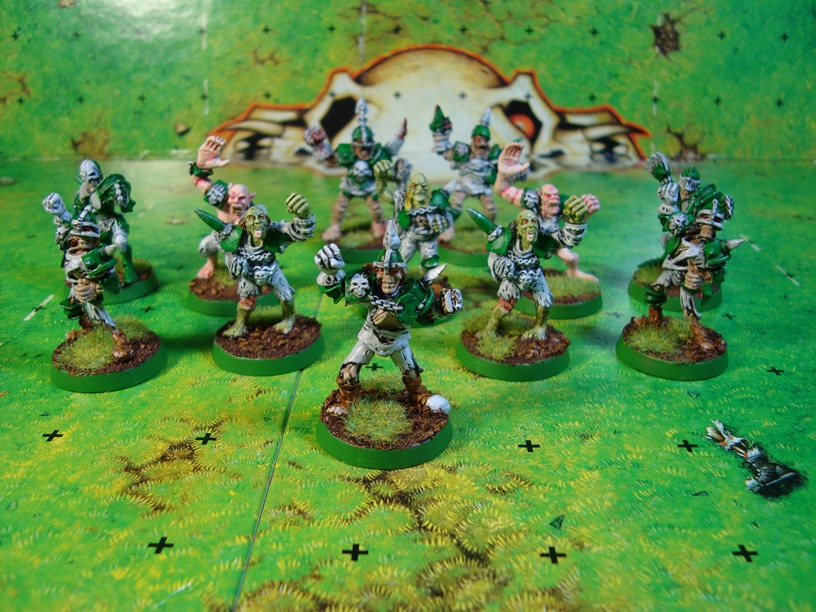
I actually got this Undead team about six months ago with the intent to paint them, and play them in Austin’s ROT Tournament this past summer. Well, I primed them, and I applied a base coat or two to all of the minis, but I never managed to finish them. Not even close. Well, with the Thanksgiving holiday, I had a long weekend around the house, so I decided that it was time to give it another shot.

Knowing how much I dislike the process, I decided early on to make things as easy on myself as possible. I decided on a green and white paint scheme. Since my primer is a light gray, all white pieces were already base coated this way. I also did not go all out with details, and little painting slips that would have driven me nuts 10 years ago were left as is. As such, is this the best paint job I have ever done? Not even close. But I did NOT want to throw all my paints and brushes out the window when I was done. That is REAL progress for me. Anyway, with my only intent being a gaming table level of quality, I am quite pleased with how they turned out, and I am even going to prime another team I had sitting on the shelf to see if I can manage to do it again. I also still need to pick up a couple of extra minis to actually field the starting roster I want, but one step at a time.

Enjoy! And sorry for my (lack of) mini photography skills.

???????????????????????????????

???????????????????????????????

???????????????????????????????

???????????????????????????????

???????????????????????????????

???????????????????????????????

Mordheim Terrain Tutorial – El Cinco

Finally! A freaking update! OK, so I will not bore you with details as to why I have not posted an update to the tutorial in while. I have just been busy. That is all there is to it. But now, I have an update to share with you! So, here we go!

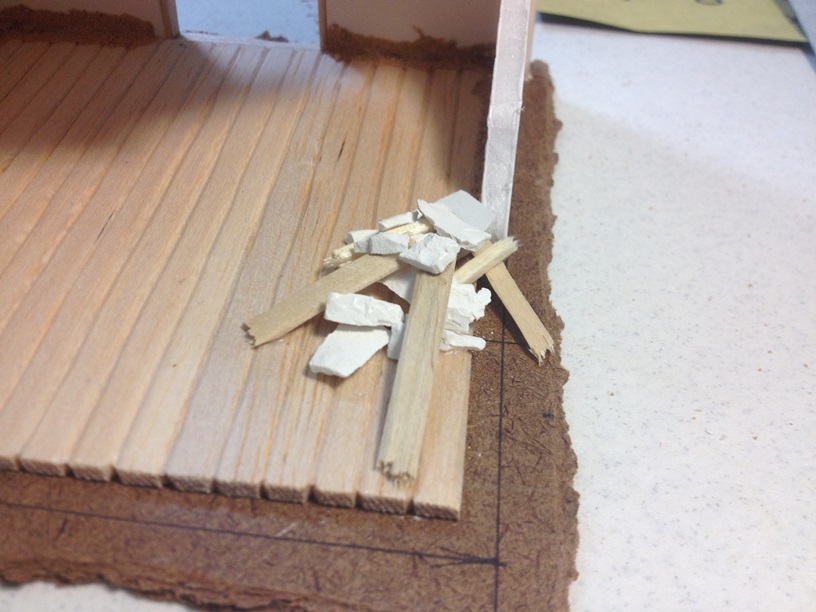
The last update ended with us working on details, and interestingly enough, that is where we pick up with this update. Just to add a little flair, I decided to add a couple of small rubble piles to the floor of the buildings. Nothing too large as I did not want the piles to get into the way of the functionality of the piece. Rubble piles are pretty easy. We just want to drop a few small wood strips, and layer them with some small pieces of foamcore, or other make shift pieces of debris. On one of the piles, I used foamcore, on another I took a plaster Hurts Arts mold brick that a friend gave me, and I broke it into chunks of various size. Both methods worked well for me.

IMG_1839b

IMG_1840b


After creating our “piles” we need to add a little grit and dirt to make it look as natural as possible.

IMG_1841b

IMG_2008b

Along with the small barrels that I regularly use in my terrain, I also had a couple of larger barrels that I had not used before, that are large enough to be big beer casks that you might find in some medieval tavern. I built a small stand for one of them and placed it in the corner. It is not an ideal location for for where it might be realistically placed if the building were real, but it was the best spot I could find to make painting the inside also viable, Sometimes you just have to make compromises.

IMG_2006b


At this point, we have enough detailing on the building to move on to the next step.

IMG_2007b

And that step is that our building needs a roof! We will use a simple but effective method for this piece. First, we will glue down a piece for our roof sections to attach to. I like to use thin cardboard from cereal, or soda boxes. This is also the material we will make our shingles out of. We just measure out pieces to fit on top of our roof sections, that have the basic shape we want the roof to take.

IMG_2009b

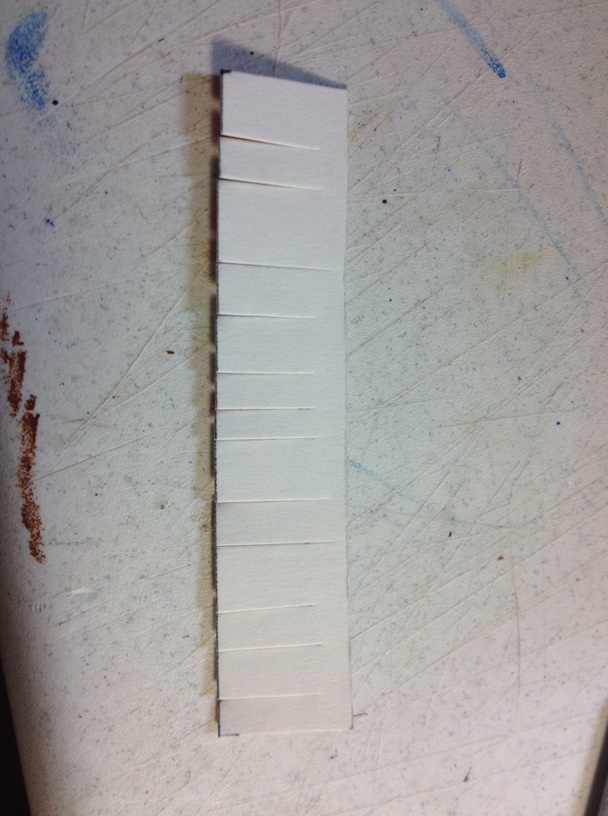
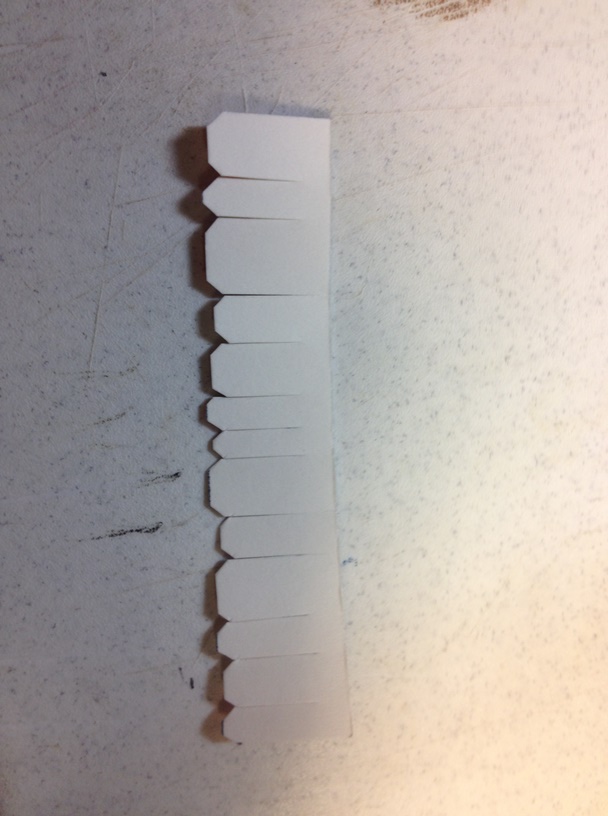
Once we have the pieces that go under the roof glued down, it is time to make some shingles. Shingles are simple, but slightly time consuming. We just measure out some strips of thin cardboard, 3/4 of an inch wide, and as long as we need to cover the roof. Once the strip is cut out, we just need to cut the individual shingles out. Using random widths, we just cut most of the way, but not ALL of the way, through the strip so that we end up with a string of shingles that are still attached along the top.

IMG_2010b


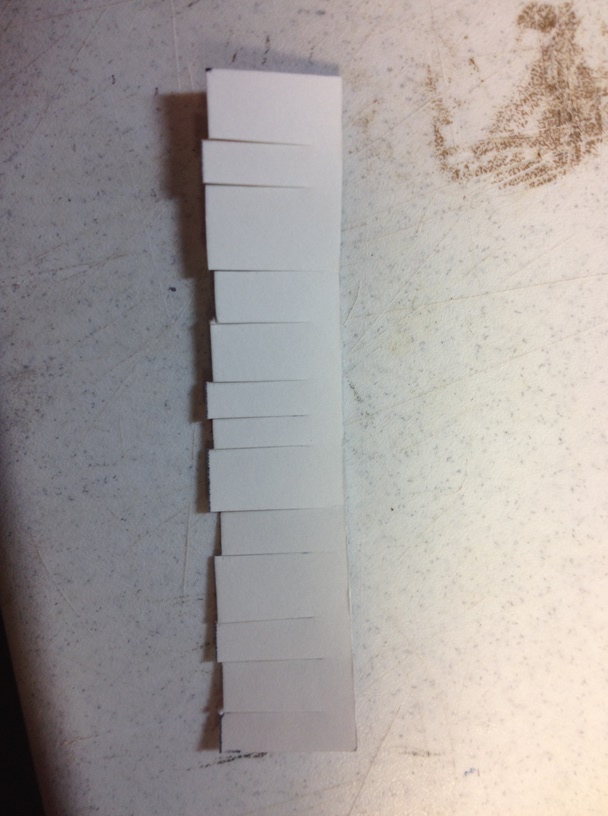
Now comes the fun part. Trim the ends of each shingle to give them slightly random lengths.

IMG_2011b


Once that is done, cut the corners off of each shingle.

IMG_2012b


Rough up the ends of the shingles, and glue the strip down to the sub roof, starting at the bottom.

IMG_2013b


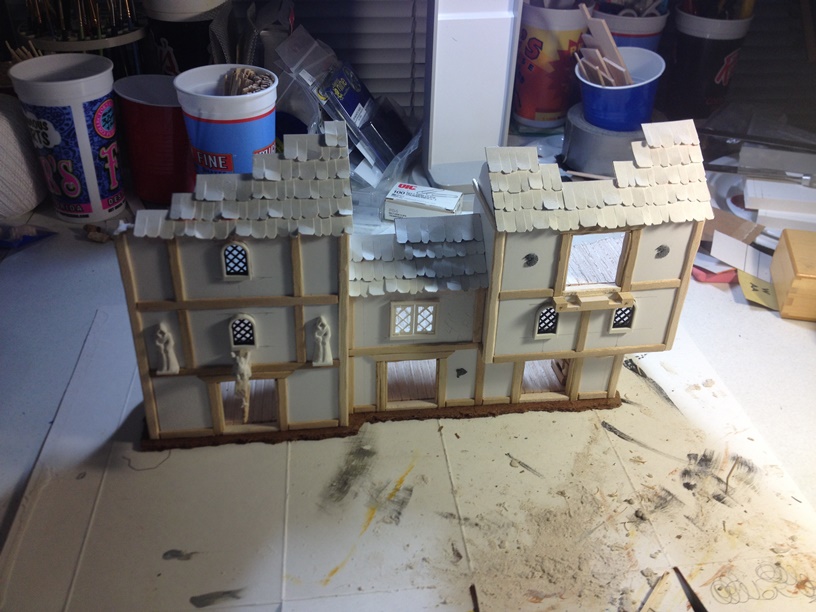
Repeat over and over until the whole roof is covered. Just make sure to stagger the shingle sections to increase the “damaged” look of the building. Once we are done, our building should look something like this…

IMG_2014b

IMG_2015b

We are almost there. One last important step before we start to paint our building. We need to texture the walls. Texture is important for terrain because the texture is what is going to help us create the illusion of depth when we paint.

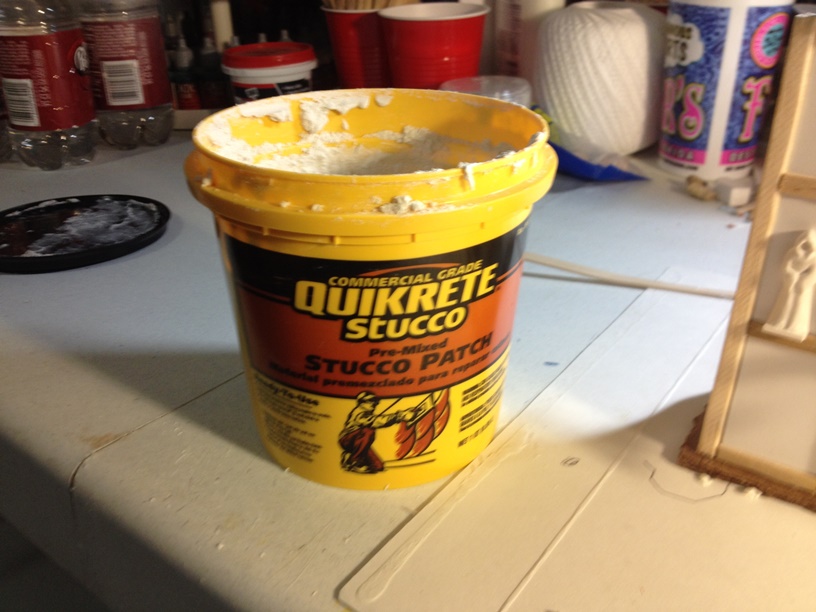
There are many methods to texturing. Some people add sand to black acrylic paint and brush that on for their base coat. Others use store bought textured paint. I use stucco patch. Stucco patch can be bought from any home improvement store, and is fairly cheap. The brand I use only cost $8 and the container is about a quart of patch. I have textured about 10 good sized buildings with it, so far, and I have only used about a third of it. If you use stucco patch, just be sure to water it down just a little. The more dry it is, the more it sticks to you paint brush, but DOES NOT transfer to the foamcore. When it is wet, it sticks to the foamcore REALLY easily.

Here is what I use…

IMG_2016b

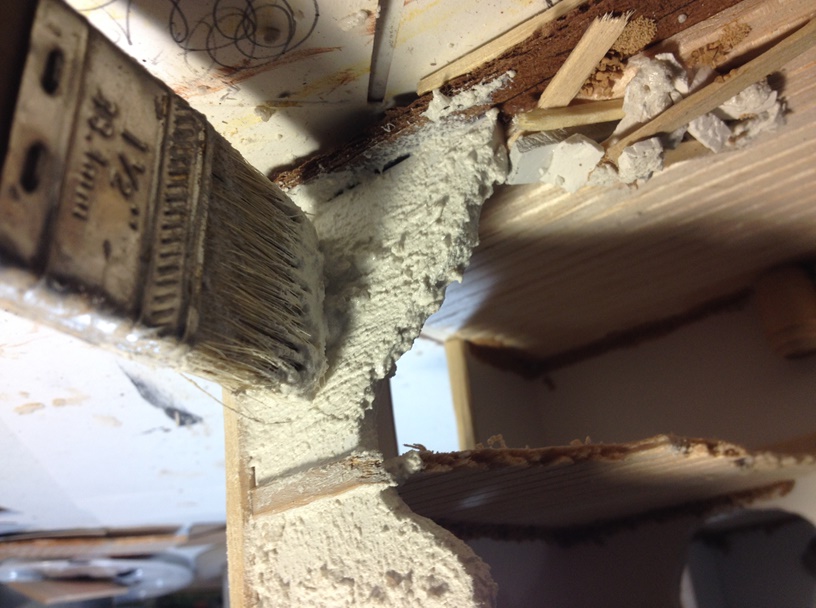
Applying it is simple. We grab an old, cheap brush, and basically just paint it on. We want to apply it to all the sections of bare wall in the building, both “inside” and outside.” We will also add some to the base all the way around. Stucco patch is great and looks realistic as both wall texture, and dirt. We just use different paint colors to separate the two. Be sure to wipe it off of any wooden sections, but do not worry about it looking sloppy. Making it look sloppy actually adds to the “gritty” look that I believe Mordheim buildings should always have.

IMG_2017b

After the texture has been applied to the whole terrain piece, we just have to let it dry overnight, and then we are ready for painting.

IMG_2018b

IMG_2019b

I make no promises, but I REALLY hope to have the piece painted this week. If I can manage it, then we should have the final post to the tutorial by sometime next weekend. Until then, comments are welcome.


Found something cool last night…

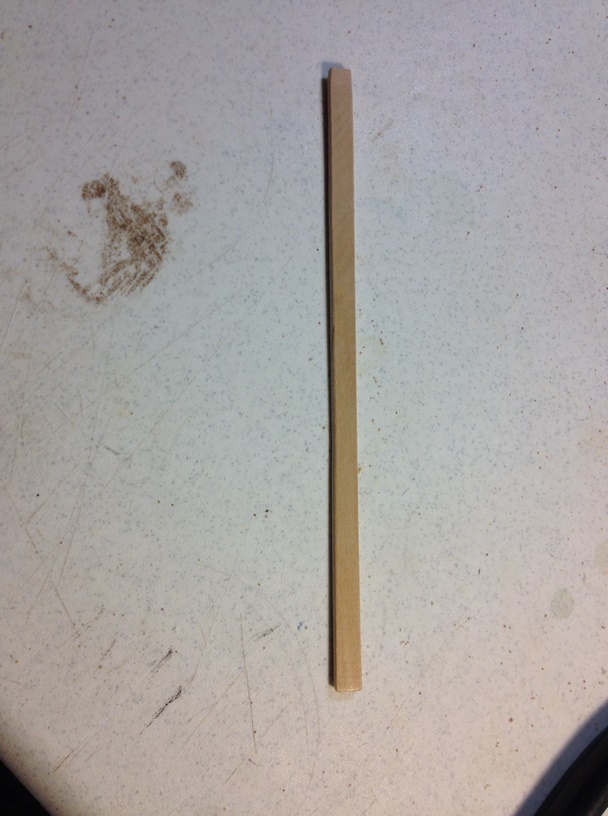
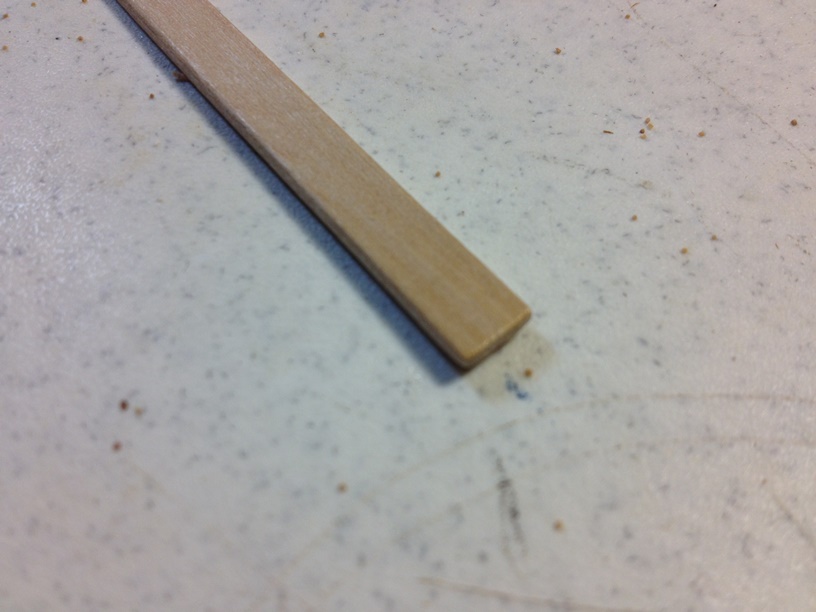
…that I wanted to share with other terrain builders. The wife drug me out to Joann’s, which I also knew as a “fabric store.” Well apparently, while I was not paying attention (which is most of the time, really), Joann’s became a “craft store” and started carrying things other thanΒ just fabric. Most of the things were standard craft and hobby items, but I saw something that grabbed my attention. Craft popsicle sticks without the usual rounded ends, that were already slightly beveled on the edges. These things are almost tailor made for terrain building. Just cut them to length and glue them in place! I’ll probably still shave them a little to give them a more rough hewn look, but for people just starting out, these would be awesome. Below are pics of the packaging and the sticks themselves…

IMG_1986b

I guess the brand name is “Woodsies.” They come in a bag of 75 for about $4. They are a little more expensive than the ones I usually get, but those have LOTS of really warped pieces that I end up tossing because they’re worthless to me. These sticks are all completely straight.

IMG_1987b

I tried to get a pic of the beveled edges, but it really just does not translate in the image.

IMG_1988b

Anyway, just wanted to pass the info along. I hope someone out there finds it useful. And stay tuned, the next part of my terrain tutorial should be coming in the next few days!

Mordheim Terrain Tutorial – IV

I really did not expect to have another update quite so soon, but after working on the piece for a while last night and tonight, I realized that I had done enough work, that I should probably go ahead and make another update. What prompted this update was simply looking at the terrain piece yesterday afternoon and realizing that I had not done NEARLY enough detailing on this terrain piece yet. So I got busy last night and I really like where I am at now.

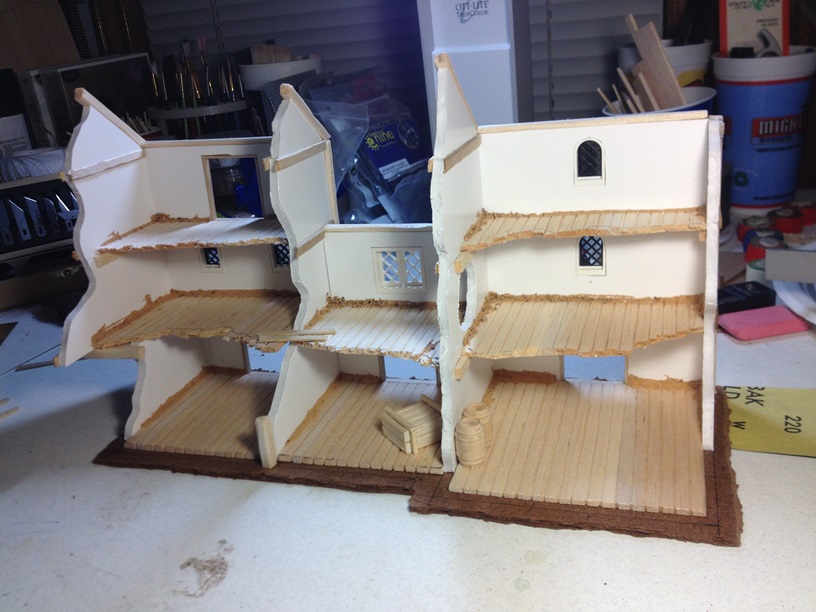
To start, here is the piece as it was at the end of the last update.

IMG_1806b

It is starting to look good, but it is still a bit bland… We REALLY want terrain to come alive to add to the atmosphere of the game, soΒ we need to grabΒ some balsa strips, andΒ a hobby knife, and get to work. First we need to add some supports to the underside of the second floor of the building on the right.

IMG_1814b

It is really easy to do. Cut a few pieces to length, shape the sides, and glue them underneath. Next, we should add some angle pieces for a little character…

IMG_1825b

IMG_1829b

IMG_1830b

As you can see, these little pieces go a long way towards really taking things to the next level. A lot of people make ok terrain that you find on gaming tables, but I like the saying, “Go big or go home.” I can apply that saying to a lot of aspects of life, and it definitely applies to making terrain.

*Quick tip*

If you are like me and do not have a hobby sized miter box, use a carpenter square, if you have one, to make sure that you get good 45 degree angles on your cuts, and cut nice and SLOW to make sure everything is straight. If your cuts on angled pieces is not straight, it is very difficult to make things fit right.

Next, I decided that I wanted a hanging sign in front of one of the buildings. These kinds of details are a little risky because they break off easily, but they look SO good. I had to have one on this piece. First, we just want to take a piece of sheet balsa wood and cut out a small rectangle. I believe I cut mine at one inch by half an inch. Then we will take a hobby knife, and simply scrape away at the edges of the rectangle to give it an appropriately worn look.

IMG_1816b

IMG_1815b

I also broke off a very small piece on one corner to give the sign a slightly uneven look. It worked out well.

To hang the sign, we will cut a strip of 1/4 inch x 1/4 inch balsa about an inch and a half long. There are a couple of different ways to hang something like this, the way I chose to do it, was I used my pin vise drill to drill two holes in both the sign and theΒ sign postΒ itself. I then drilled a hole all the way through the wall, andΒ pinned the sign post to the wall. (Sorry, no pictures.) Then I used some small string to run through all the holes, and hang the sign to the wall.

IMG_1817b

If you use this method of hanging a sign, you will want to add drops of super glue to the top of the string so it does not get pulled through the holes of the sign post, and more drops to the knots on the sign itself to make sure it does not get untied. Now, assuming we are all on the same page… We simply need to trim off the excess string and our sign looks more realistic.

IMG_1818b

Now, this looks good, but it is unlikely a sign post would simply stick out from the wall like this. It needs a support, so we need to add one. We just cut another angled piece just like we did for the floor supports already and glue it to the bottom of the sign post.

IMG_1819b

One more quick step to finish off our sign… I have found that simply spray painting string with a black base coat and dry brushing it makes it fuzz up really bad, and it does not take paint well. We need to “seal” the string a little so it holds it’s braid a little more. This is a simple, but important step. We need to put a small drop of white glue on a finger, and smear it around.

IMG_1821b

Then just rub the glue on the string. And we are done with the sign…

IMG_1822b

(sorry for the blurry picture.)

The rest of what I have for tonight is pretty much just simple detailing. So I will just show the pictures…

IMG_1824b

A makeshift bridge spanning a missing wall section.

IMG_1828b

IMG_1827b

IMG_1826b

IMG_1831b

Some nice repurposed Hirst Arts pieces.

IMG_1832bIMG_1833b

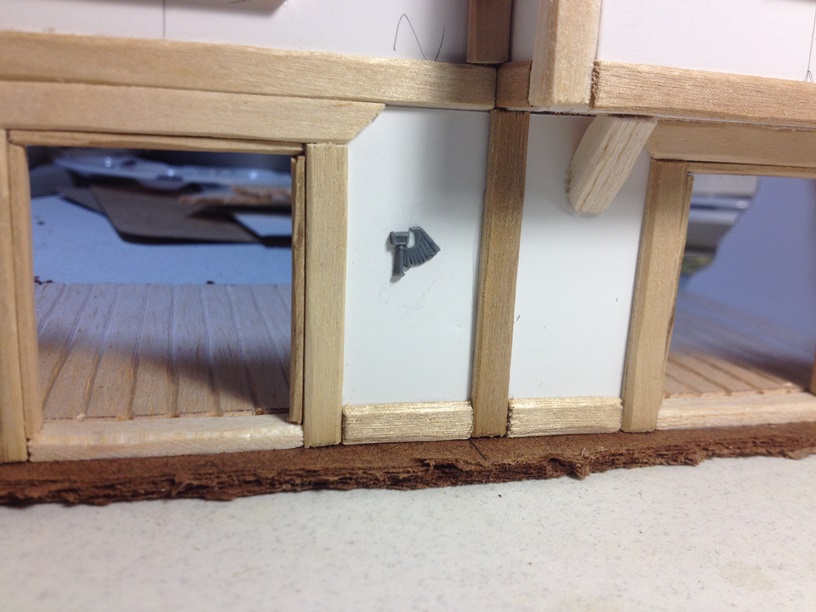
A few Warhammer Fantasy plastic shield emblems.

IMG_1834b

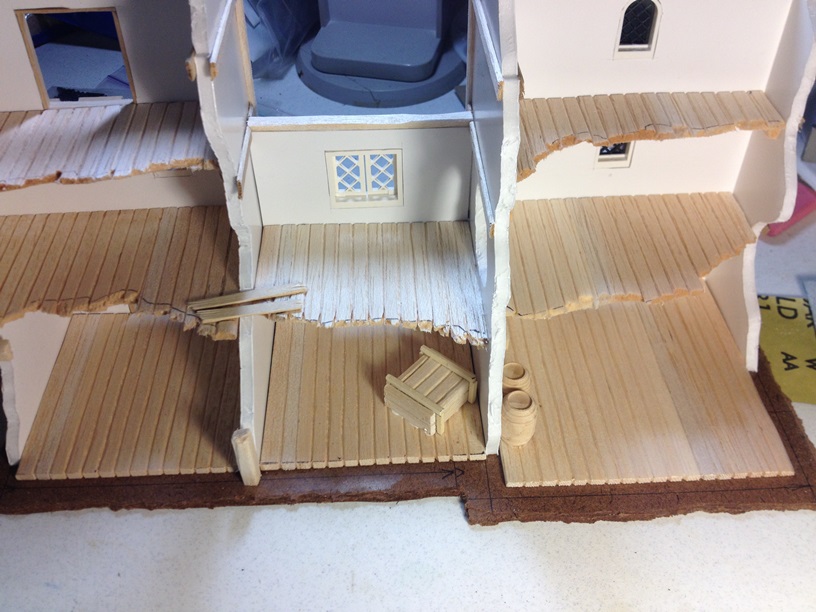
A quick, homemade crate, andΒ couple of CHEAP doll house barrels.Β I get themΒ for $1.49 for a pack of NINE barrels. They are not super detailed, but they paint up very nicely.

IMG_1835b

IMG_1836b

IMG_1837b

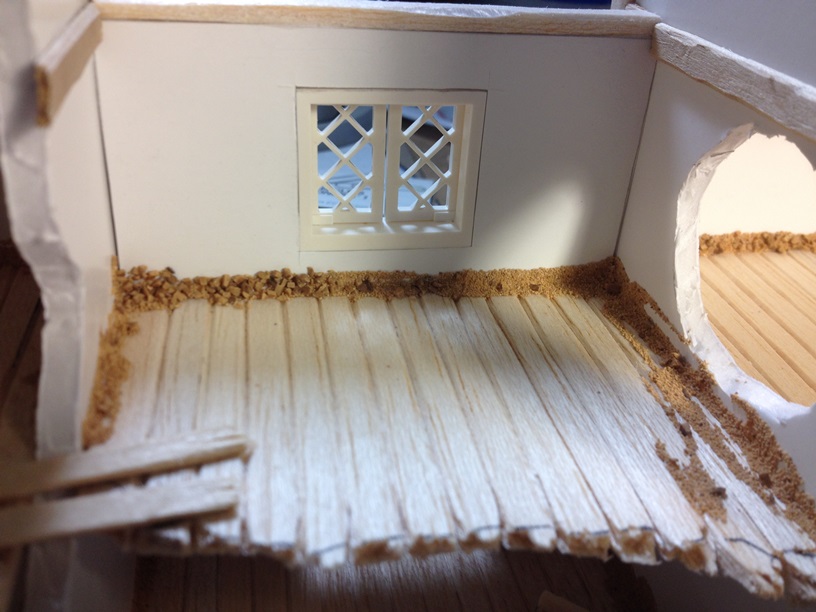
Then I added a little sand around the base of all the walls to simulate the accumulated crap floating around Mordheim that you would expect to pile up in corners.

That is it for tonight. I said in the last update that I hoped to have the piece finished by the end of the weekend, but I forgot that I will be taking the family on a nice vacation all next week, so the finally installments will have to wait until we get back. I MIGHT squeeze in another update before we leave Friday night, but honestly, I doubt it. Until next time…….

Mordheim Terrain Turorial – The Third! (AKA, It’s About Frikkin Time!)

Ok, so it has been, what, two months since my last update on this tutorial? Yeah, I know, I REALLY suck at this blogging thing… Anyway, I have some real life things that kept me very busy lately, and so the terrain piece just sat on my table gathering dust… until now. This update will be kind of quick, mostly because I did not get a too much done tonight, but I still want to post what I did finish to hopefully motivate me to finish this bad boy. Here we go…

IMG_1806b

At the end of part two, we had just started detailing the piece. Now, the only real rule on detailing is that there really is no such thing as too much. I stopped where I did in order to not make things too complicated for this tutorial, but I could have easily gone much farther with the detailing. It really is the details that make the difference in terrain, and really take things to the next level. I will probably still do a little more embellishment with plastic bits once I have added the roof sections. Maybe I will even whip up one or two scratch built goodies. As I have said before, I never plan too much because I like to be a little surprised by the way things take shape as I go.

Anyway, the construction details basically consist of cutting lengths of popsicle sticks and gluing them all over the place. I glue strips along the bottom of each floor, around doors as door frames, and in random spots here and there to simulate support framing. Just glue them everywhere… Once the piece is textured and painted, it will look really cool.

IMG_1793b

IMG_1794b

IMG_1795b

One thing I like to do that might seem trivial, but I think adds aΒ lot to the piece, is I also glue strips on theΒ INSIDE ofΒ the doorsΒ as well, completely framing out the door. I did not always do it that way. when I first started, I would just glue the frame piece to the outside of the door, then texture on the inside pieces, but I think doing it this way looks much better. This is whatΒ I mean…

IMG_1804b

It may seem simple, but it’s all these simple things that add up to make really big things.

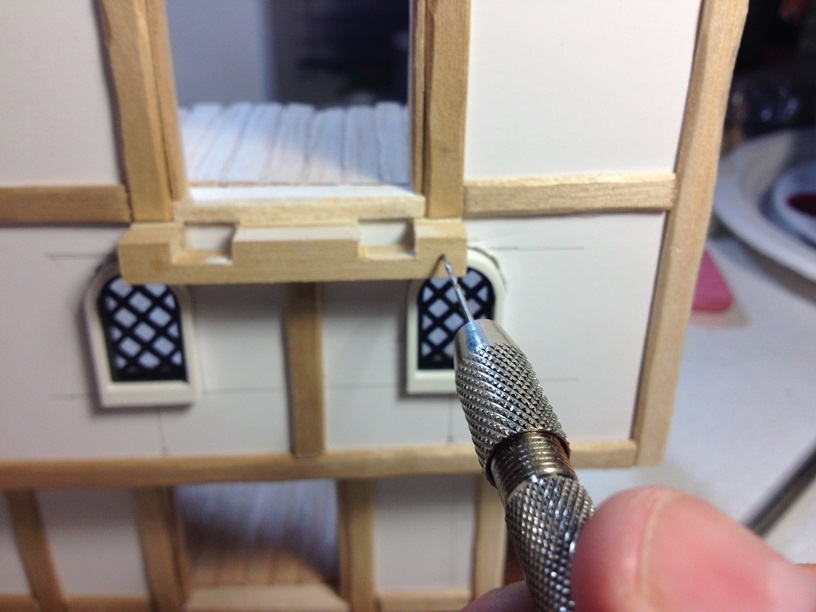
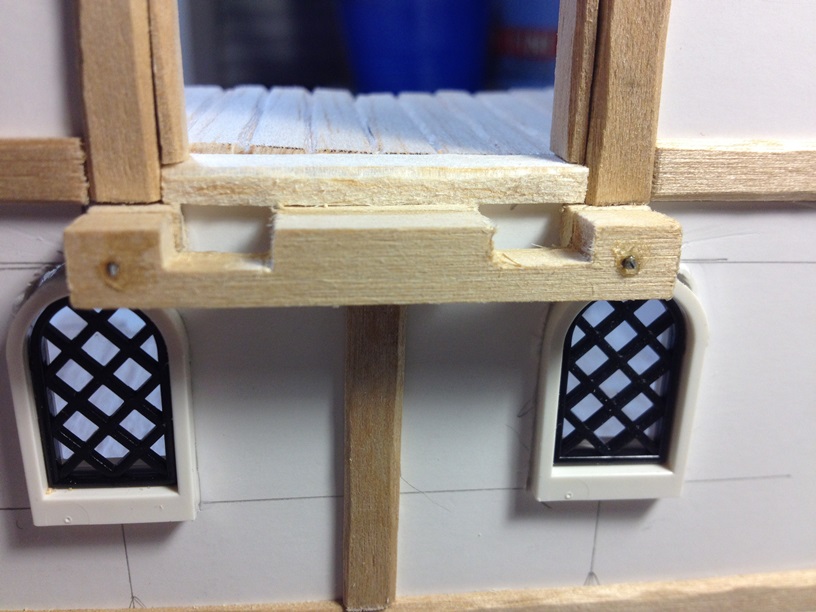
Now, you might also notice, in the bottom of that picture, the mount piece for my modular bridges. The mounts are actually really simple. I make them from two different sizes of bass wood strips. 1/4 x 1/4 inch, and 1/4 x 1/8 inch. I mark the length of the 1/4 x 1/4 strip to the same length as the door frame, specifically, two inches long. Then I cut a one inchΒ piece and then two 1/4 inchΒ pieces from the 1/4 x 1/8 strip. I glue the 1/4 inch pieces to the ends of the 1/4 x /14 section, and the one inch piece to the center. If measured correctly, that should leave a 1/4 gap on either side of the one inch piece. Cut 1/4 inch notches out of the 1/4 x 1/4 piece where the 1/4 inch gaps are, and the mount is done. All we need to do is glue it to the wall, nice and centered on the door. Once it is glued to the wall, we are going to put a pin through it for a little added strength. On the back side of the wall, I used another piece of bass wood as a support for the floor. Usually, I would use balsa wood since the floors should not ever need to support much weight, but since I knew I was going to put a bridge mount here, I used the bass wood for extra support. First, I drilled a hole with my pin vise drill.

IMG_1796b

Once the hole was drilled all the way through, I used a straightened paper clip with some super glue on the end for my pin. Here is the finished product.

IMG_1797b

It should be good enough to support the bridge and hopefully not come apart with casual table bumping.

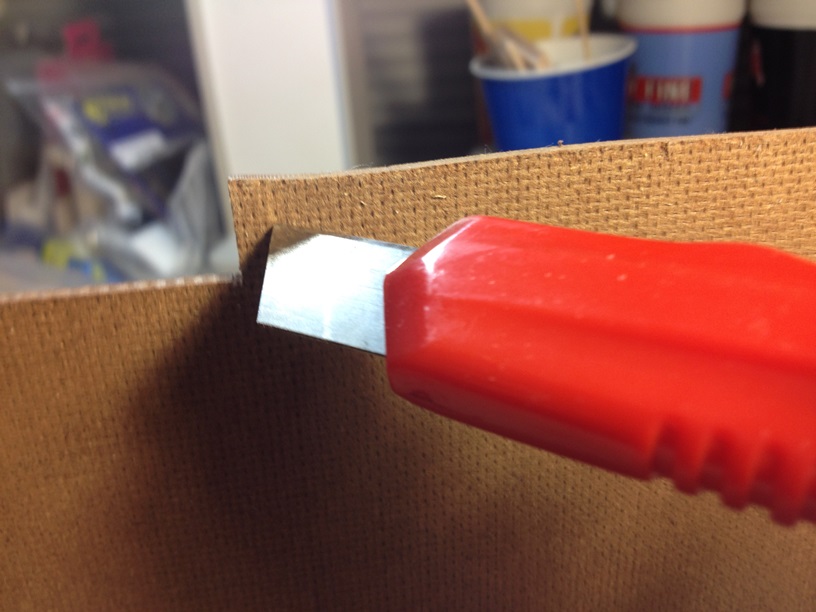
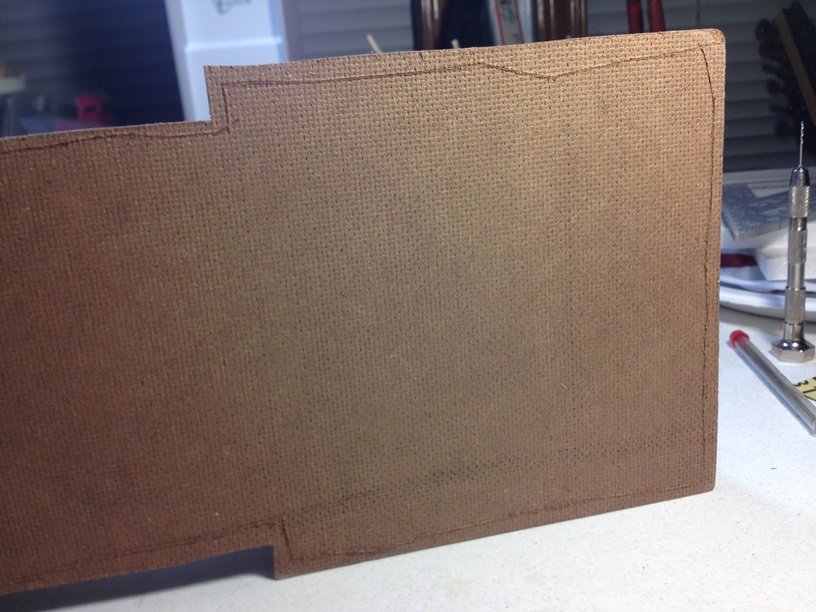
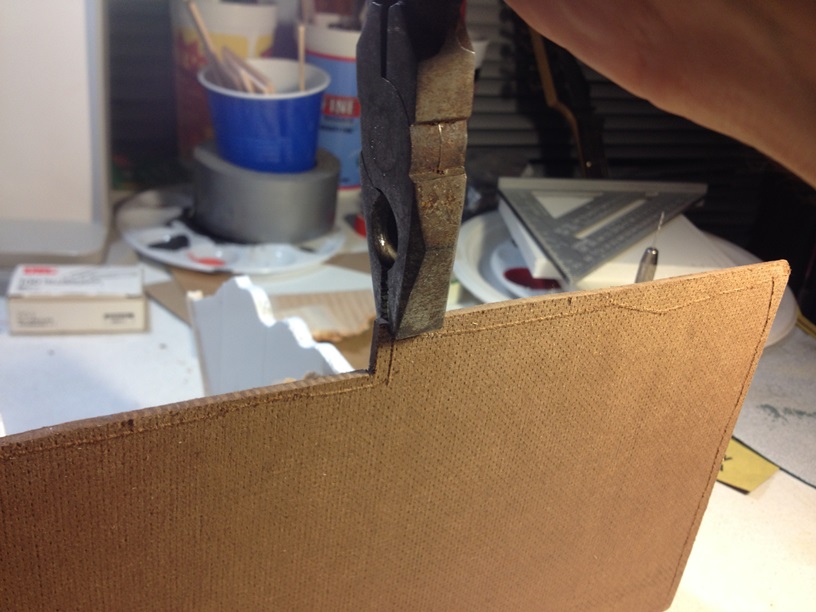
The next step could, and honestly, probably should be done much earlier, but I always just seem to wait until the last minute to do it. We need to roughen up the edges of our base. It is really simple to do with hard board. Just turn the piece upside down, and use a utility knife to score line around the underside of the piece. The line does not have to be straight, in fact, it is probably better and more natural looking the less straight it is.

IMG_1798b

IMG_1799b

Once we have our score all the way around the base, we will just take a pair of wide pliers, I like kleins personally, and bend the outer edge upward. this creates a nice, rough, layered edge that looks pretty natural.

IMG_1801b

IMG_1802b

Once we have done this all the way around the base, the piece will really start to look like something.

IMG_1803b

IMG_1806b

Well, that is about it for today. My intent is to make roof sections, do finishing details and texture the piece in the next few days. Hopefully, there will be an update but the end of the week, and I might even be able to paint and finish the piece by the end of the weekend. Only time will tell!

As always, comments and criticisms are always welcome.

Mordheim Terrain Tutorial – Part Deux!

OK folks, I am back with my Mordheim Terrain Tutorial – Part Deux! If anyone missed Part 1, you can read it here. Since I am laid up in bed with massive neck pain, I figured I would use the time to write another installment in this tutorial… that and watch Big Bang Theory on blu-ray. πŸ™‚

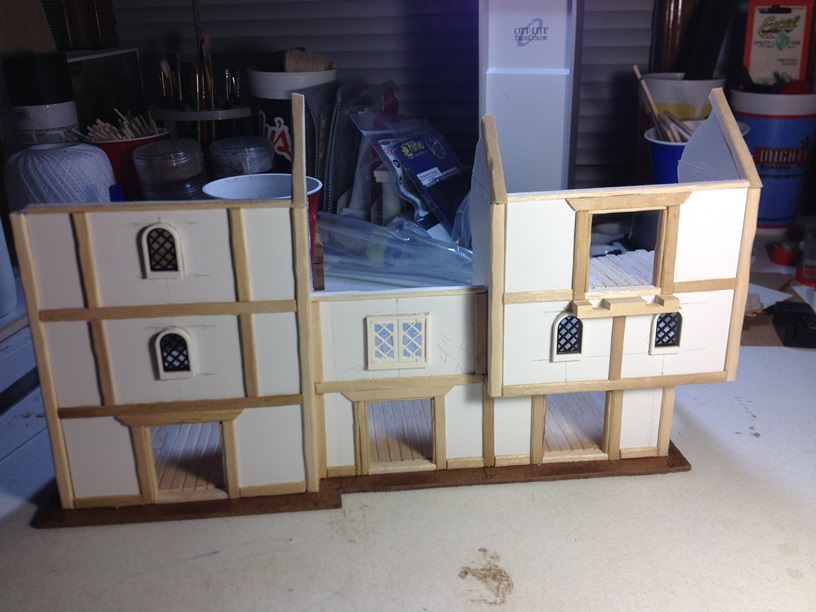
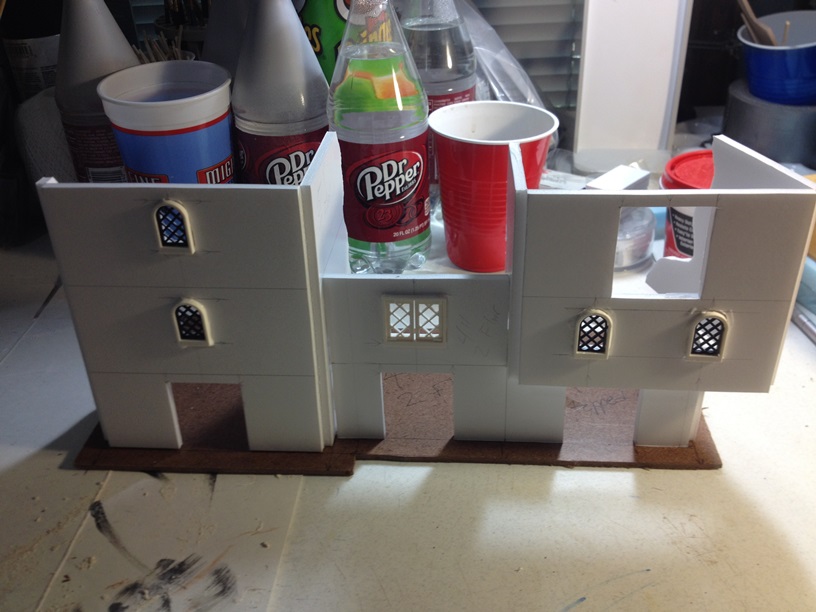
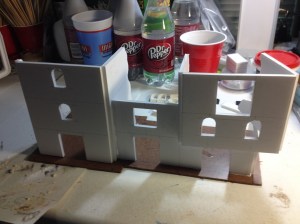
So, we ended Part 1 with gluing our wall sections together. Here is a shot for a reminder:
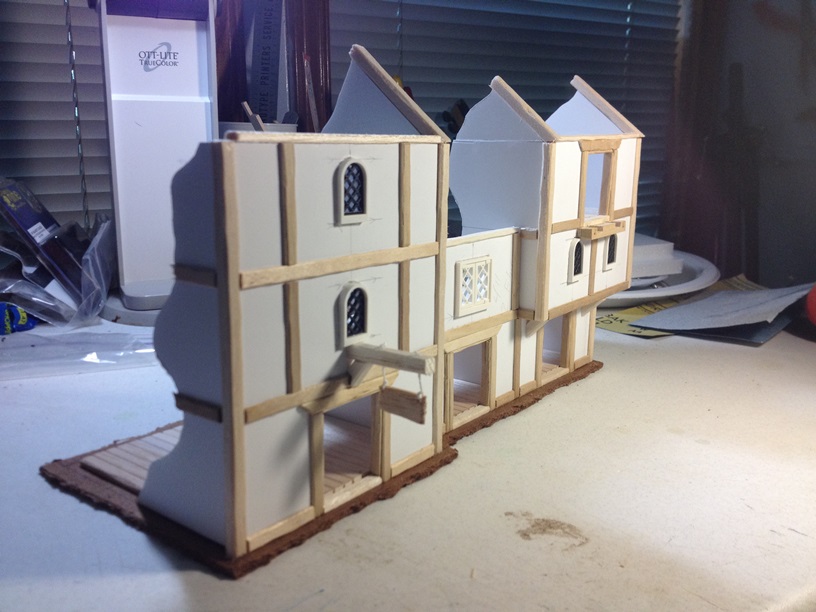
IMG_1661b

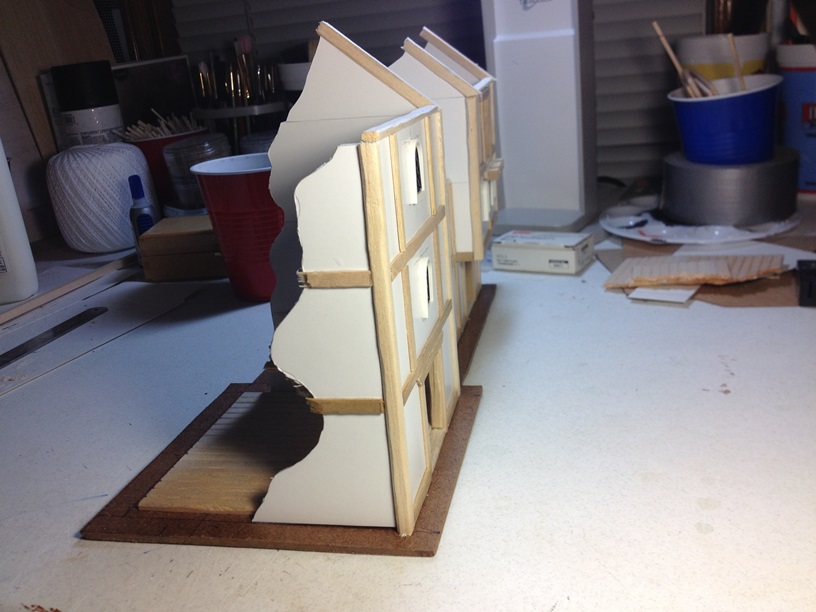
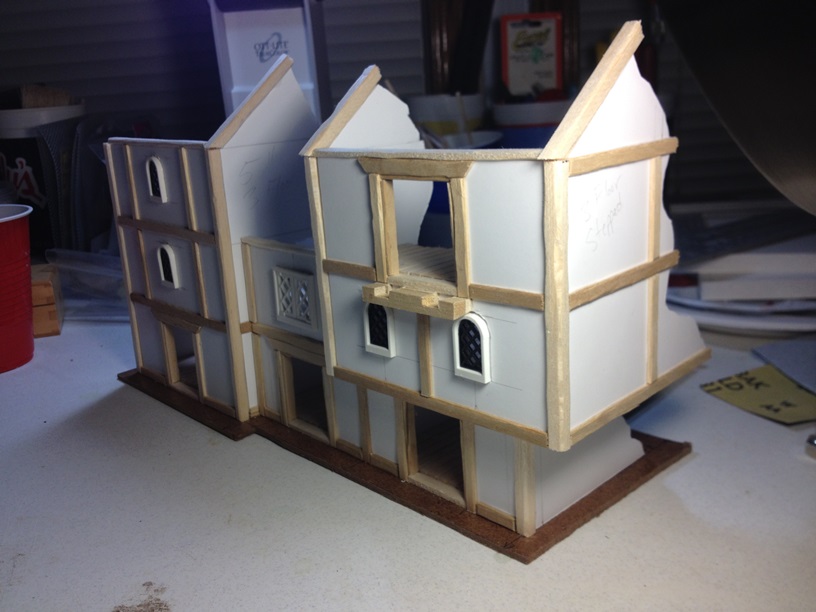
TheΒ  second and thrid floor of the section on the right overhangs the first floor, but since the wall piece on the left, which forms the right wall of the center piece, stretches to the ground, it can support the weight of the upper floors without first adding a floor under the overhang. If your piece overhangs all the way around, you will need to support the upper floors first. Also, we will not worry about any small gaps in the seems of our walls at this point. We will address those later with detailing pieces and texture before painting.

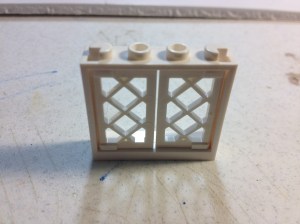
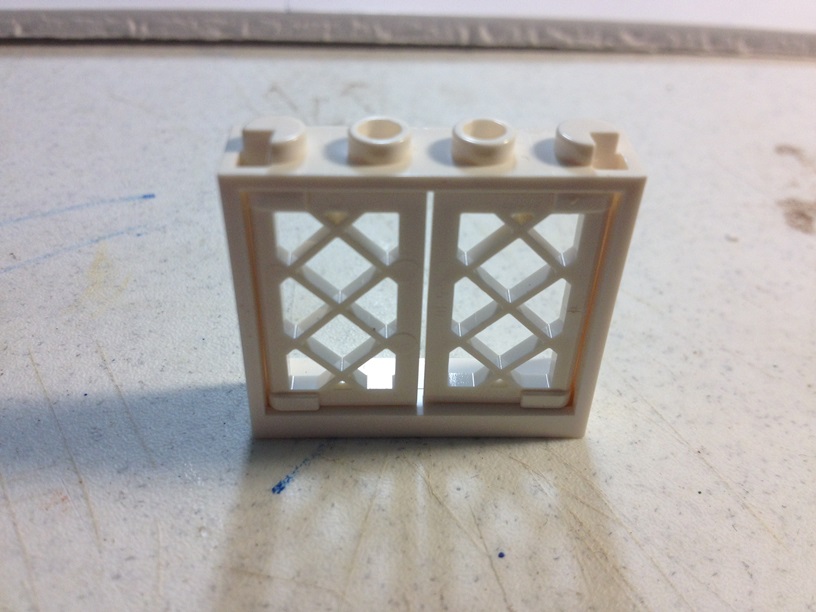
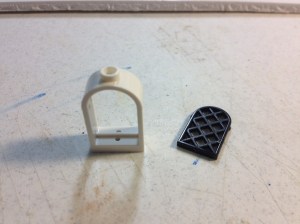
Now, at this point, lets go ahead and prepare toΒ insert our Lego windows. When we first get our Lego pieces, they will look like this:
IMG_1648b

And this:

IMG_1649b

What we need to do in order to get the windows ready to add to our terrain, is remove the pieces on top that allow Legos to connect to each other.Β We can cut them off with a hobby knife, file them off, or do use my favorite method, fire up theΒ dremel! A dremel, or any other rotary tool, with a sanding drum attached will make very short work of the connector pieces, but be careful not to remove too much. UnlessΒ we want toΒ reate a really damaged look to our windows,Β we want to be sure not to change the shape of the window itself. When done, our windows should look like this:

IMG_1650b

Now our windows should just slide straight into the openings we already cut:

IMG_1662b

Add a little white glue and our windows are in for good.

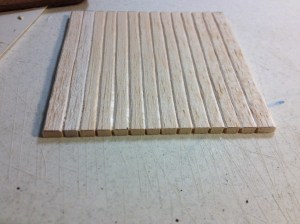
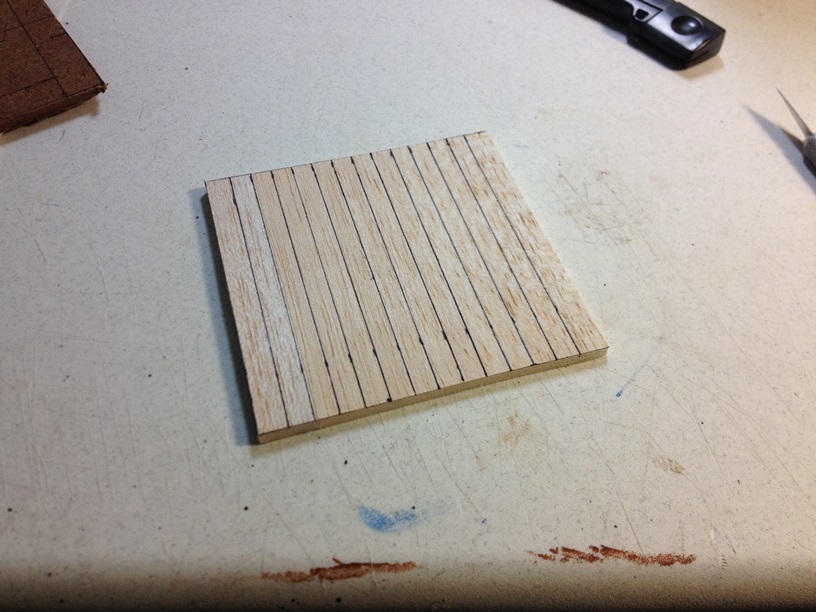
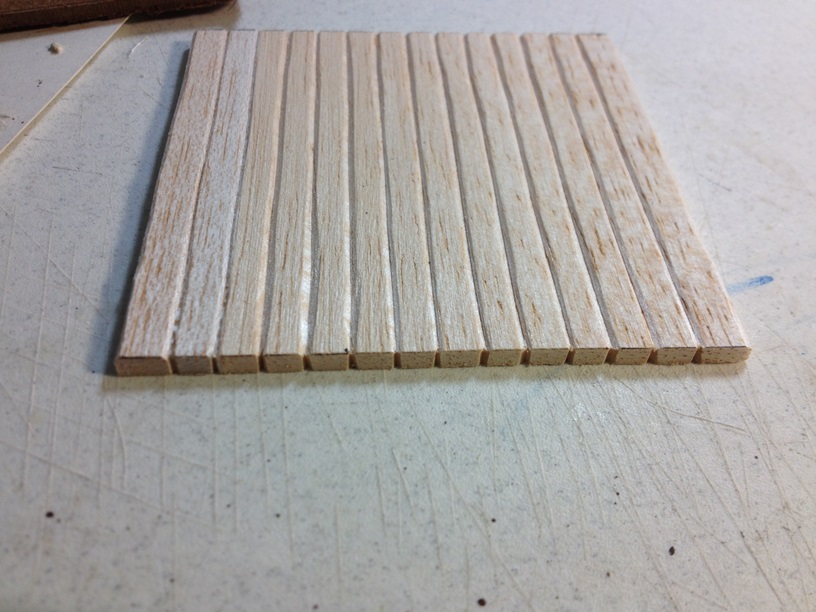
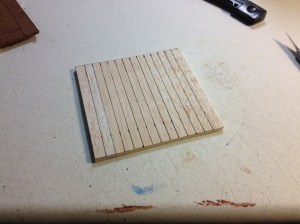
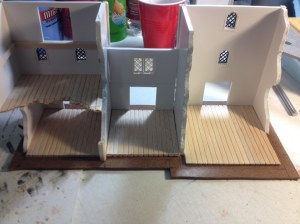
Now we can start adding floor sections to the buildings. Over the years, I have trried numerous methods of making wooden flooring for my buildings. I think the absolute BEST looking method I have found is using individually cut, shaped, and glued craft popsicle sticks about 1/4 inch wide. Unfortunately, that method takes for freaking EVER, so I gave it up a fw months ago.The method we are going to use for these buildings is MUCH faster, and while the results are not QUITE as nice, they still look good. We are going to use 1/8 inch thick sheet balsa wood. You can get it from most craft stores for a few dollars. We will start with the bttom floors as they will be full squares.

First, we have to measure our INSIDE dimensions for our floor sections. If we use the outside dimensions, our floors will be 3/8 inch to long and too wide. Once we have our measurements, we can cut out the sheet balsa with a hobby knife. Then we measure out 1/4 strips to serve as our “individual” boards, and draw them with a fine point marker:
IMG_1667b

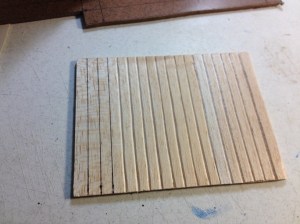
Once our lines are drawn, we can do two things. We can simply go over the lines with a ball point pen, pressing harder each time to create indentions into the balsa, but I find that once you start to add paint, the balsa soaks it up and swells just slightly making the lines a little less defined. What I prefer to do, is take a hobby knife and make angled cuts from two directions to remove a “V” shaped section where my line was. This way, there is no wood left to swell back out, leaving our “individual” boards more defined.

In progress shots:
IMG_1663b

IMG_1668b

As can be seen in the above photo, any edge that is not concealed by a wall section, I also like to notch the piece on the end. This continues the illusion that each floor board is seperate. As the saying goes, the devil is in the details.

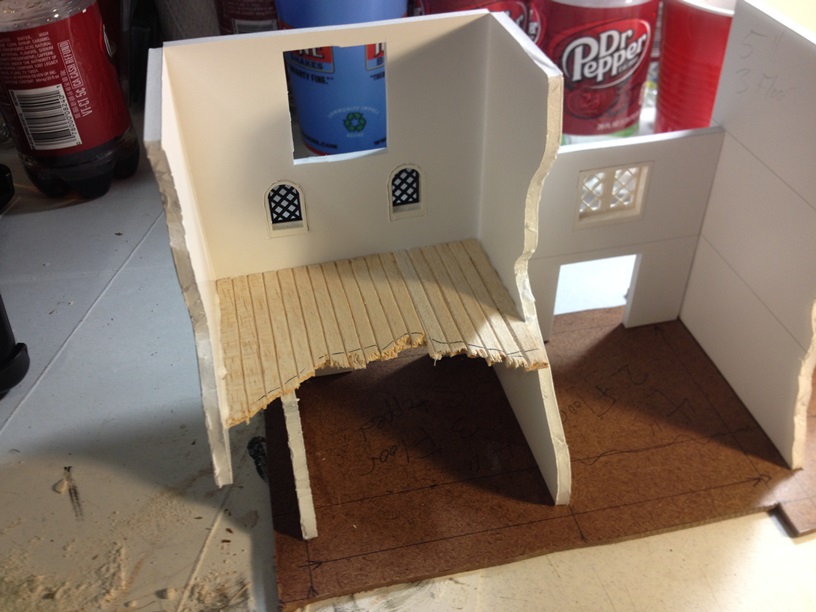
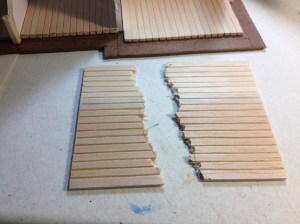
We can also go ahead and make the floor for the stepped sectioned of our right side building. ThisΒ piece will keep our upper floors squared and support the weight of the rest of the building. We basically start the same way. measure out a nice square piece and cut our “individual” boards. Then, since the building is partially destroyed, we will go ahead and decide how much of our floor to break off to simulate building damage. I use the length of the wall sections to gauge the floor dimensions, and since we went ahead and measured a full square, we have some extra left over for any other section that have the same dimensions:
IMG_1671b

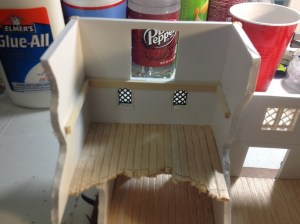
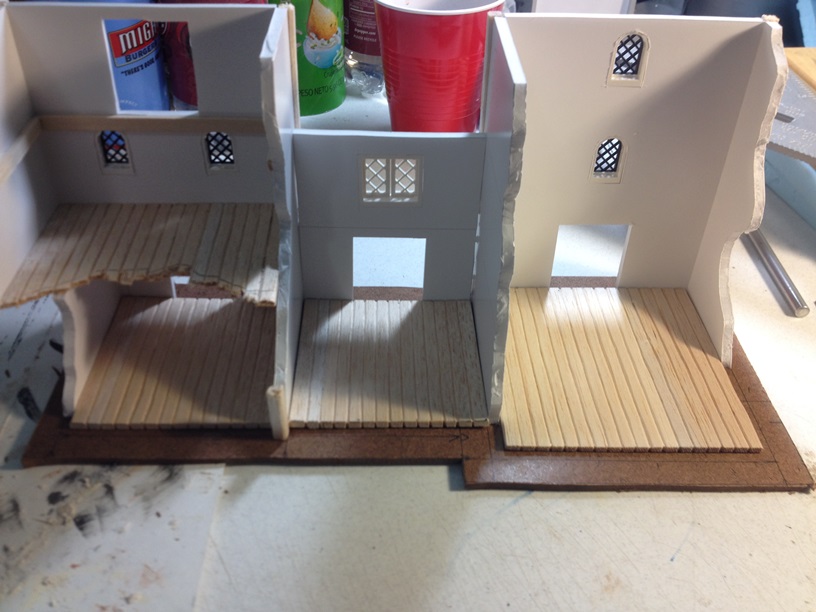
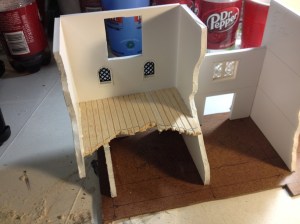
To add the floors to the terrain, we start by simply gluing down the bottom floor squares. Then we move on to the lower floor of the stepped section. All we need to do, is glue the edge of the floor piece where it is flush with the bottom of the wall, and everthing should line up perfect. With other upper floors, we will just use some balsa strips glued to the walls to support the floors themselves. Nice and easy peasy:
IMG_1664b

IMG_1669b

IMG_1670b

IMG_1672b

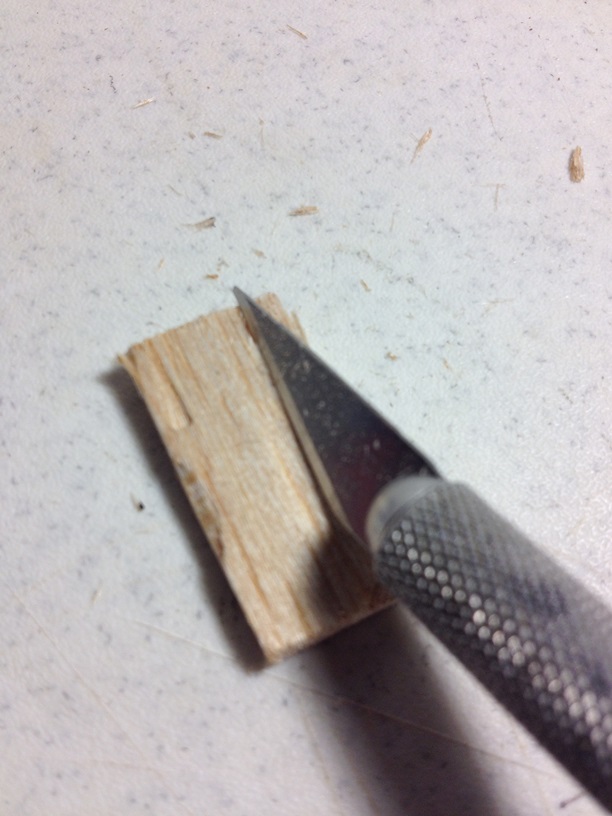
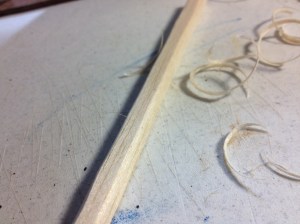
Now it is time to add our corner beams. Because we only partially cut through our foamcore walls, and folded them around, we obviously have a gap where our corners folded away from each other. 1/4 inch square balsa strips fit PERFECTLY into those gaps. First we cut them to length with a hobby knife. At this point, our balsa strips are the right length, but they are a little too perfectly square for the period we are trying to capture. We really want a more “rough hewn” look here, so what we are going to do, is we are going to take our hobby knife and slightly shave off three side. The fourth side will be left sqaure because it will be hidden within the wall gap. Leaving the third side square also increases surface area for gluing. Once shaped, our corner pieces should look something like this:
IMG_1665b

This paints up REALLY well.

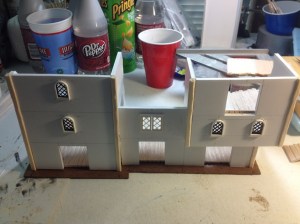
When our corner braces are cut and shaped, we simply need to glue them into place. That leaves us with this:
IMG_1673b

On to the next piece!

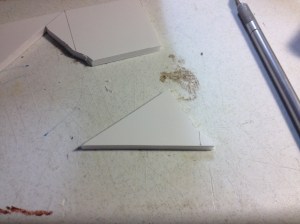
Since our roof will not be flat, we need to make some angled wall sections to hold the roof up. Now, you CAN do this when originally drawing out the wall sections, but I seem to ALWAYS forget to do that, so we are adding them now. Do not judge me… πŸ™‚

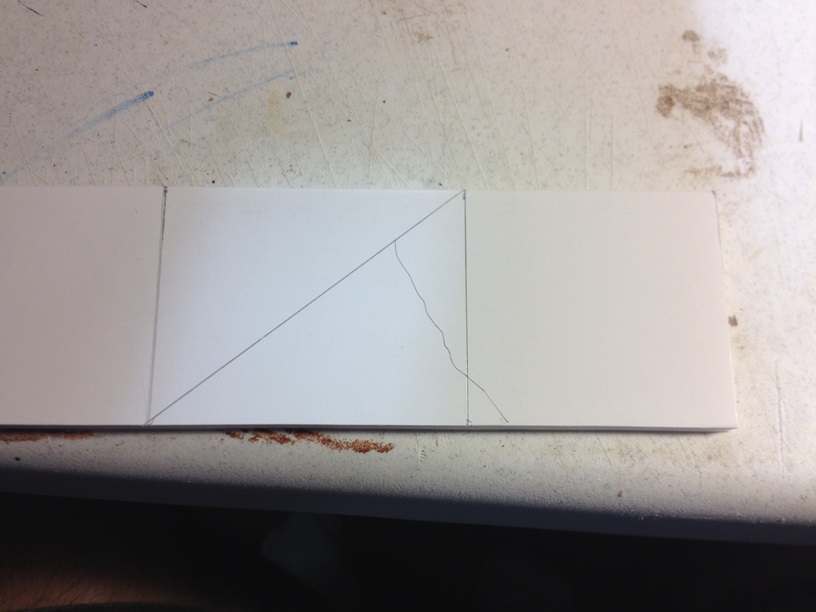
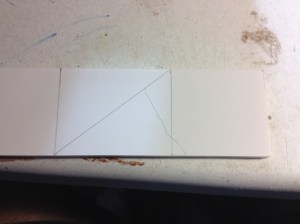
This is pretty easy, we can just use a piece of cutoff laying around to lay the angled pieces out.Β We canΒ just use the normal floor height of two inches, measure out half of length of the wall section, and draw a diagonalΒ line across to establish our roof angle. Like this:
IMG_1675b

We just draw a jgged line, as shown to simulate our building damage, and cut the piece out with a hobby knife:
IMG_1676b

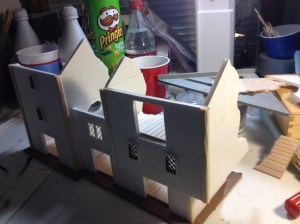
Rinse and repeat for the two end building wall sections that will support roof pieces. For the building in the center, we will just use balsa strips to support the roof sections. Glue them in place, and BING!
IMG_1677b

Do not worry about the slight seems created by gluing on the top pieces. We will cover those with detailing and texturing later.

Now come the funnest, and most time cunsuming part of the project. DETAILING! For me, there is one simple rule to detailing. There really is no such thing as too much. Seriously.

We will start with craft popsicle sticks:

IMG_1678b

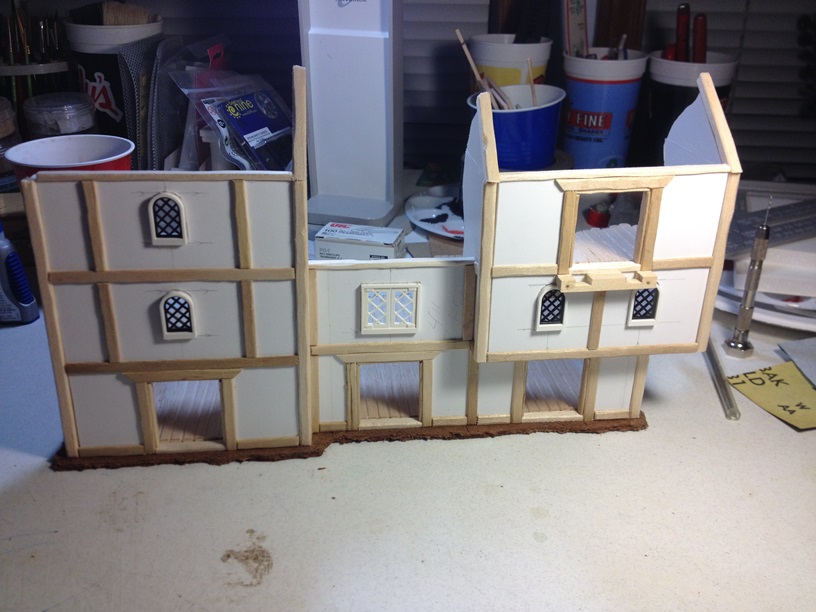
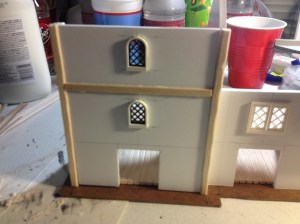
We use these to give the buildings a real “Tudor” style look. We can add them all over the place. The more the better. Again, we want a real rough hewn look, so we will shave down the edges of the sticks with a hobby knife after we have measured, and cut them to length. Then it is just a matter of gluing them everywhere:
IMG_1679b

Since I have a LOT more detailing to do still, we will end this part of the tutorial here. I hope to have detailing and texturing done by the weekend. If so, then I will also post the next part of the tutorial.
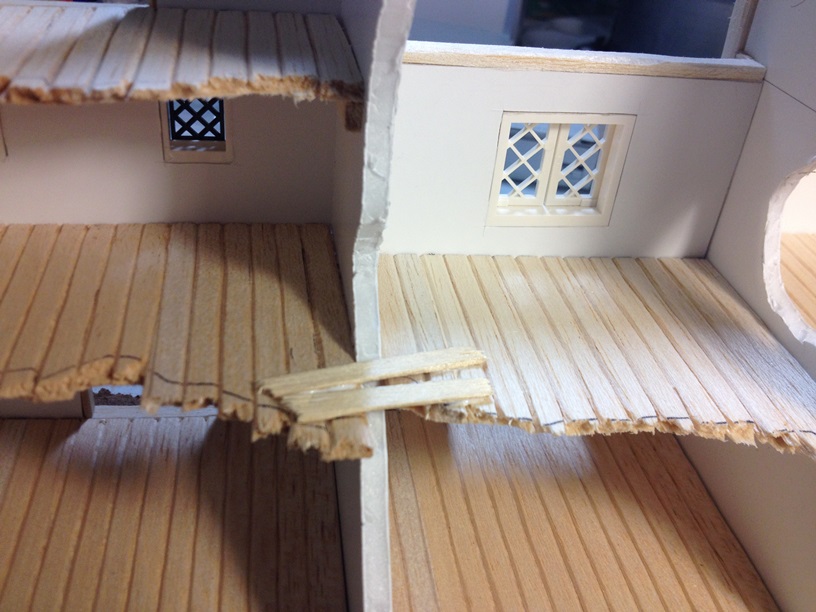
Again, feel free to let me know what you think of my tutorial in the comments.

Thanks